

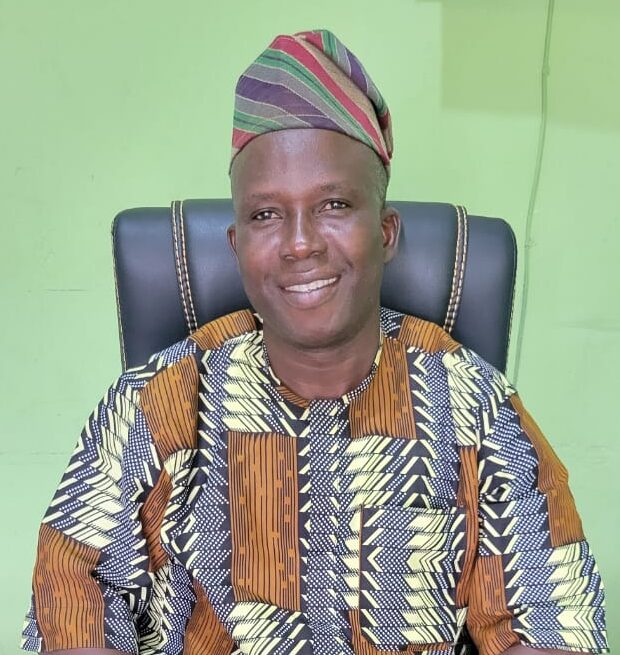
area of specialization: agricultural economics
Email: oaegbetokun@iart.gov.ng, oaegbetokun@gmail.com
Phone Number: +2348038275959
RELEVANT PUBLICATIONS:
1. Egbetokun, O. A. (2021): Determinants of Output Commercialization among Crop Farming Households in Southwestern Nigeria. Moor Journal of Agricultural Research 22: 85 – 93 (Nigeria).
2. Egbetokun, O. A. and Amao, I. O. (2022): What factors determine the level of watermelon farmers’ market participation? Journal of Applied Agricultural Research 10 (2): 83 - 90 (Nigeria).
3. Egbetokun, O. A., Amusat, A. S., Omonona, B. T. and Sabitu, N. A. (2022): Determinants of Resource-Use Efficiency in Fishery Production in Oyo State. Journal of Agriculture, Forestry and Social Sciences 20(2):44-55 (Nigeria).
4. Egbetokun, O. A. and Fraser, C. G. C. (2023): Farming Households’ Food Demand in South Western Nigeria: An Application of Substitution Elasticity Demand System (SEDS). African Journal of Agriculture and Resource Economics 15(1): 56-66 (South Africa). Scopus indexed.
5. Amusat, A. S., Oyedokun, M. O., Omisope, E. T. and Egbetokun, O. A. (2023): Risk Management in Agricultural Business: Insurance as a Viable Option. Journal of Experimental Agriculture International 45(8):49-53 (India). Google Scholar indexed.
6. Egbetokun O. A., Ajijola, S. and Babalola, I. R. (2023): Labour input and productivity among cassava farmers in Osun State Nigeria. Nigerian Agricultural Journal 54(1):233-237 (Nigeria).
7. Egbetokun, O. A. and Fraser, C. G. C. (2023): Water Footprint and Economic Productivity
of Potato Production in South Africa. World Journal of Environmental Biosciences 12(4):27-34 (India). Google Scholar indexed.
8. Egbetokun, O. A. and Amao, I. O. (2023): Factors influencing tomato farmers’ market participation and constraints in production. Nigerian Agricultural Journal 53(3):476-482 (Nigeria).
9. Egbetokun, O. A. and Obisesan, O. O. (2023): Comparative analysis of profitability of poultry egg marketing in Iwo area of Osun State and Akinyele area of Oyo State. Journal of Agriculture, Forestry and Social Sciences 21(1):68-77 (Nigeria).
10. Idowu, A. E., Egbetokun, O. A. and Omonona, B. T. (2024): Households’ willingness to consume whole plant-based diet in Ido Local Government Area of Oyo State, Nigeria. Nigerian Journal of Agriculture and Agricultural Technology 4(1):252-265 (Nigeria).
Bio Narrative Statement
Prof. Olugbenga Aderemi Egbetokun
Research Professor, Institute of Agricultural Research and Training (IAR&T), Obafemi Awolowo University, Ibadan, Oyo State, Nigeria.
My academic and professional journey has been defined by a persistent focus on transforming agricultural systems through research in production economics, agribusiness, and resource-use efficiency. Trained as an agricultural economist with advanced degrees from Obafemi Awolowo University and the University of Ibadan, and further refined by international exposure at Wageningen University (The Netherlands) and postdoctoral work at Rhodes University (South Africa), I have committed my career to bridging the gap between scientific research and practical agricultural development.
My research is grounded in understanding how smallholder farmers and rural enterprises respond to innovation, market forces, and climate-related challenges. I have focused extensively on identifying inefficiencies in farm production, barriers to commercialization, and policy-relevant pathways to food system resilience. In addressing these issues, I utilize mixed methods to assess not just productivity, but also the socio-economic and ecological sustainability of farming practices.
Over the past 17 years at the Institute of Agricultural Research and Training (IAR&T), I have led and participated in numerous multidisciplinary projects funded by the World Bank, FAO, ARCN, and the Marie Curie Institute (University of Bern). One of my most impactful contributions involved pioneering research on the economic burden of Fall Armyworm infestations in Nigeria. This work not only quantified farmer losses but guided interventions that reduced pest damage by 65% and increased incomes by 20%. This effort, along with our introduction of improved planting densities and high-yield seed varieties, has led to transformative productivity gains—up to 65% in some communities—especially within the Institute’s adopted villages where I facilitated cooperative formation and capacity building.
My scholarly output reflects the breadth and depth of my research engagements. I have published over 40 peer-reviewed articles in respected journals spanning Africa, Europe, and North America, including studies on market participation, yield optimization, risk behavior, food demand, and climate-smart agriculture. These publications contribute to an expanding body of evidence on sustainable intensification and inclusive agribusiness models. I also serve as a reviewer for journals such as the American Journal of Environmental Science and Engineering, Moor Journal of Agricultural Research and the Nigerian Journal of Scientific Research, to mention but a few, and have mentored stakeholders from Subject Matter Specialists (SMS) to farmers and youth groups through REFILS and community-based trainings.
Institutionally, I have held leadership roles such as Team Leader of the Soybean Research Project at IAR&T, Coordinator of FAO-funded pest management projects, and Secretary of academic and conference organizing committees. I have actively contributed to the strategic direction of agricultural research in Nigeria through my work with the Ogun State Agricultural Development Programme and as Desk Officer for the IAR&T Adopted Village Program.
My current research examines market participation among maize, tomato, cassava, and fishery producers, as well as the economic viability of quality protein maize under irrigation systems. I am also involved in modeling food consumption patterns using elasticity-based demand systems and assessing farmer risk attitudes in response to technology innovation.
Looking forward, my scholarly vision centers on integrating data-driven research with policy advisory roles to shape national and continental strategies for agricultural resilience. I am particularly passionate about research that not only generates knowledge but empowers farmers, improves market access, and influences systemic change in food production and distribution.
In all, I view academia not only as a platform for intellectual inquiry, but as a tool for socioeconomic transformation. With a unique blend of theoretical grounding, empirical rigor, and applied field experience, I am committed to advancing inclusive agricultural development, fostering global research collaboration, and nurturing the next generation of agricultural economists.